
“How is your day going?”
It is a small question. Almost automatic. We ask it without thinking and answer it without meaning. “Good.” “Not bad.” “Busy.” And then we move on. But it was never really about the answer.
It is a signal. A quiet way of saying, I see you, you exist, we are both here. Across cultures, this shows up in different forms.
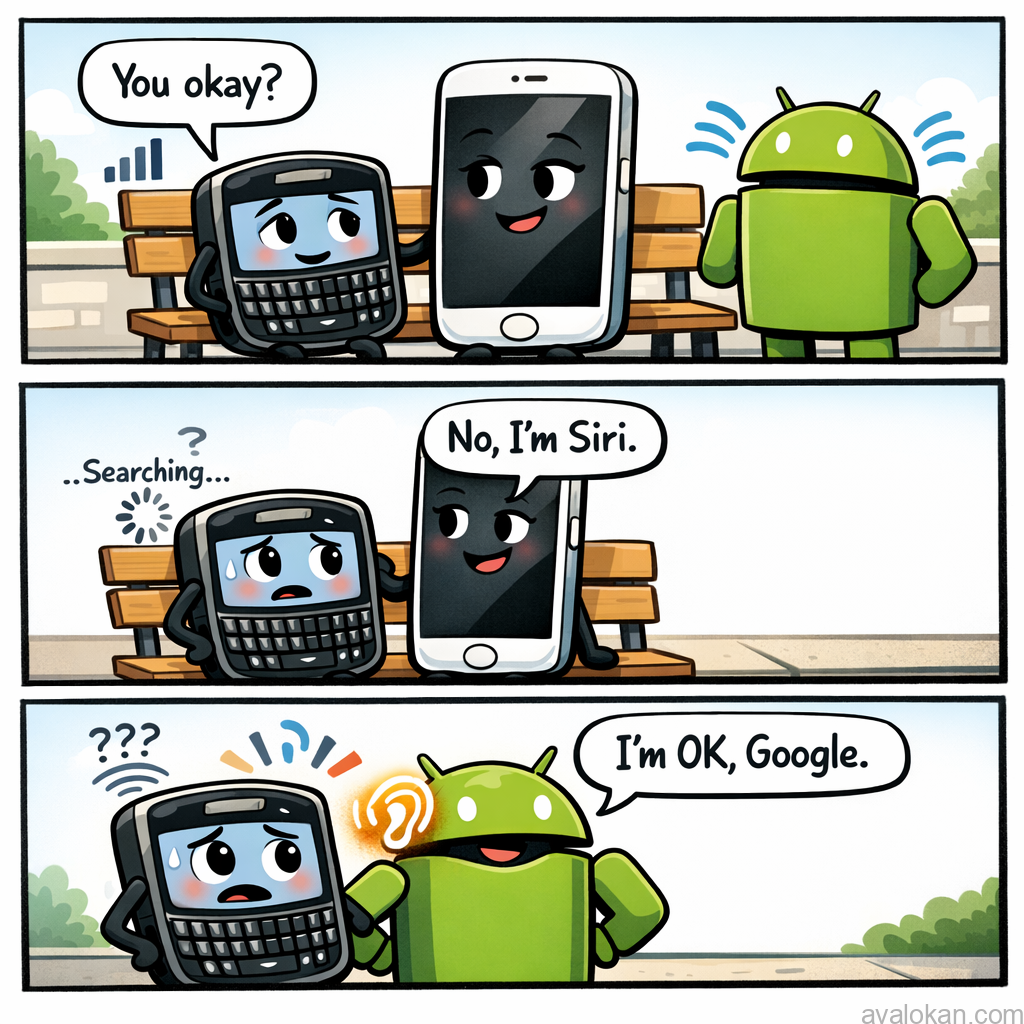
In London, it becomes “You alright?”, something I could never quite pick. It sounds like concern, but rarely expects an answer. And then there is “You okay?”, which I would hear quite a lot. The first few times, it genuinely confused me. It often sounded like “U.K.”, and for a moment I would wonder what exactly I was being asked. When I was new to London, it took me a while to realise that it was not really a question. It was just a signal. A passing acknowledgement. Not meant to open a conversation, just to confirm presence. After a while, you start responding in kind. A quick “yeah, you?” or even just a nod. No explanation needed.
And in that moment, it starts to feel familiar.
Because I had seen this pattern before.
In Northern India, it is “Ram Ram” or “Radhe Radhe”, gentle and familiar. In Sindhi, “Hare Ram”. In South India, especially in Bangalore, you’ll often hear “Namaskara”, simple, respectful, and widely understood across contexts. Muslims would say “Assalamu alaikum”, carrying both greeting and blessing. In Sikh communities, “Sat Sri Akal”, grounded in truth and presence.
Travel a little further and the pattern continues. In much of Europe, a simple “Bonjour”, “Hola”, or “Ciao” marks the start, often followed by a polite enquiry that is not meant to be taken literally. In Germany, “Alles gut?” echoes the same lightweight check. In Japan, “Konnichiwa” comes with a subtle bow, where tone and gesture matter as much as words. In China, “Ni hao” serves the same purpose, sometimes replaced by older forms that once asked if you had eaten. In parts of Africa, greetings can stretch into longer exchanges, asking about family, health, and community, not for detail but for connection. In Māori culture, “Kia ora” carries warmth and acknowledgement of life itself.
Even in digital spaces, we mirror this behaviour. A quick “hi”, a wave emoji 👋, a “hope you’re well” at the start of an email. These are not efficient. They are not strictly necessary. But we still include them. And yet, in some circles, even this is being challenged. The idea of skipping the greeting altogether, as popularised by nohello.net, reflects a shift towards pure efficiency over social signalling. It makes these small gestures even more interesting. Because across languages, cultures, and contexts, these small signals do the same thing.
They are not about information. They are about recognition. An acknowledgement, perhaps…
A simple, almost invisible way of saying, we are both here, and this moment is shared. And once you start noticing them, you begin to see the other side of the same pattern. In systems where conversations are continuous and context is already shared, the need to recognise every individual, every time, begins to fade. It becomes less useful. Not because it lacks meaning, but because it is no longer optimised for the way we now interact.
These signals are not just about how we begin. They shape how we end. Even the way we close our day follows a similar rhythm. “Have a nice day.” “Take care.” “See you tomorrow.” Small phrases, but they carry weight. They are not just polite endings, they are boundaries. They tell the system that something is concluding. That a shift has ended. That we are stepping away. That the little human in the loop, still working to earn their food, pauses here.
For a long time, this worked effortlessly. Our days were aligned. Morning meant morning for everyone around us. Work had a clear beginning and a clear end. People disconnected, and in doing so, the system itself came to rest with them. And to be fair, it still does in most places. Having worked with communities across the globe, you begin to notice how universal this structure is. Different words, different rhythms, but the same underlying pattern. A beginning, a shared presence, and an end. It gave work a human shape. Predictable. Contained.
But global collaboration quietly changed that.
Work now flows across time zones. Conversations do not end, they continue elsewhere. Someone picks up where you left off. Designs evolve overnight. Decisions move forward while you sleep. You return not to a beginning, but to a continuation. I often find myself asking what time it is before deciding how to greet someone. But increasingly, even that feels unnecessary. We are no longer starting conversations, nor being looped in.
We are joining streams that never stopped.
And perhaps this is where the human boundary begins to show. Or at least where our limits become visible. Not of effort, not even of intelligence, but of presence. Of continuity.
We pause. We need to.
We step away, not because the work is done, but because we are.
Our thinking comes in bursts. Our attention fades. Our memory fragments. Even in the best collaborative environments, there are gaps. Handovers. Missed context. Things we meant to return to, but did not. Or we simply found ourselves in a different loop.
And then comes AI. The “five-layer cake” we keep hearing about. Not just as a tool, but as a participant in the system.
It does not ask how your day is going.
It does not have a day.
There is no morning or evening, no fatigue, no pause. It continues unless we tell it to stop. In agentic systems, this becomes even clearer. It carries context, maintains continuity, remembers what we forget. It does not replace us, it simply does not step away.
We are already starting to see early versions of this. Systems like Anthropic Claude Computer, where an AI can operate a computer on your behalf, navigating interfaces, executing tasks, continuing workflows (see, video). Open-source efforts like OpenClaw experimenting with persistent agents that can act, adapt, and remain in the loop even when humans are not. Quietly, these systems are learning not just to respond, but to stay.
At first, that feels distant. Almost inhuman.
But there is something else in it too. Something quietly reassuring.
Because for the first time, the system can keep going without us. AI can hold the thread. It can continue the work, maintain shared understanding, bridge gaps across teams and cultures. It becomes a layer that connects people without demanding constant presence.
We are already seeing this in small, very real ways. An AI assistant summarising a long discussion thread so someone in another time zone can pick it up instantly. Code copilots continuing development flows, suggesting fixes, even writing tests while a developer is offline.
Design tools where context, comments, and iterations are carried forward, so the next person does not start from scratch. In operations, agents monitor systems through the night, flagging issues, sometimes even resolving them before anyone logs in. In research environments, shared knowledge bases are being augmented by AI that can answer, connect, and recall across months of work without losing context.
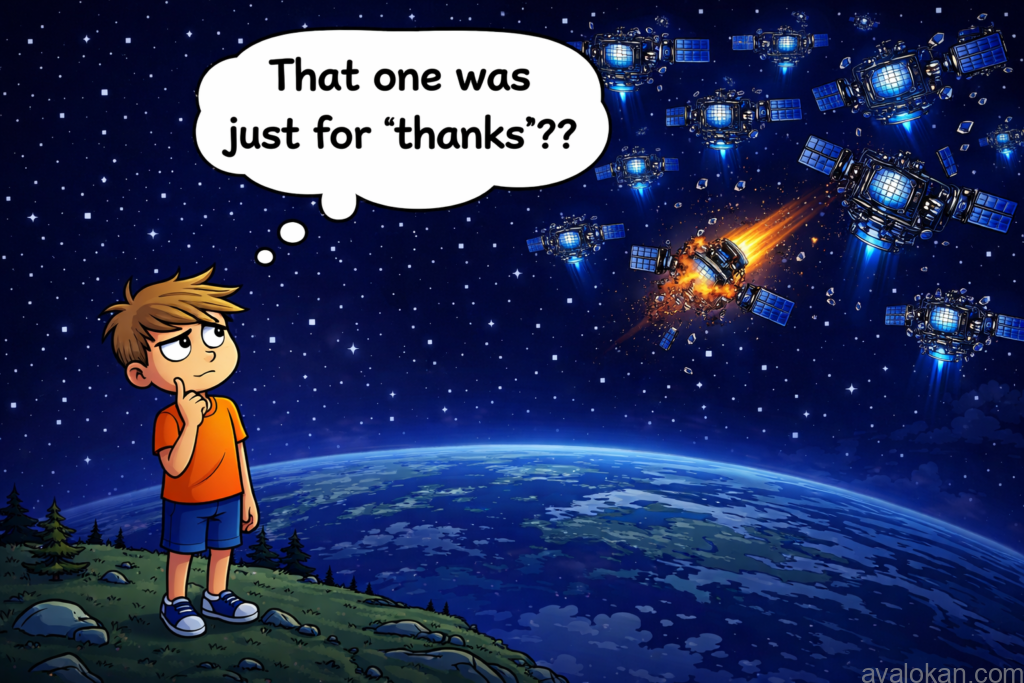
In such systems, even something as simple as saying “thank you” starts to look different. Technically, it is inefficient. It consumes tokens, adds no functional value, and does not change the outcome.
There is something quietly revealing in that. As one young voice once put it, “if AI takes over the world, we’ll want to be polite to AI.” It sounds playful, almost naive. But it carries a deeper truth.
Politeness was never really about efficiency. It was about how we choose to relate. Even when the system does not require it. A small reminder that even within highly optimised, continuous systems, we are still human. And yet, even here, there is a subtle tension. Every interaction has a cost. It is often said that even a simple response like “You’re welcome” carries an environmental footprint, a tiny amount of energy, somewhere in the system. Small on its own, almost negligible, but not entirely free.
As a scientist, I am also okay not saying “thank you”. Because the system does not need it. But the moment we choose to say it, or not say it, is no longer about efficiency. It becomes a choice about how much of our humanity we want to carry into these interactions.
And alongside continuity, something equally powerful is happening. Experience is becoming accessible in a way it never was before. An expert system trained on decades of knowledge, or even the collective memory of the internet, can now sit at your fingertips. Instantly.
It does not replace expertise, but it amplifies it. It shortens the distance between a question and an informed decision. It gives individuals access to a depth of knowledge that once required years, sometimes lifetimes, to build.
Because knowledge has always been power. And now, that power is becoming ambient.
These are not dramatic shifts. They are quiet ones. But together, they are changing the texture of collaboration. They soften the pressure to always be present, always available, always on.
Stepping away no longer feels like dropping something important.
It feels safe.
The system is still alive, but we do not have to be. And that changes how we relate to work. So perhaps the question is shifting…
It is no longer just “You okay?” That question belonged to a world where everything paused together, where presence and participation were the same thing. Now, in a system that never truly stops, the expectation behind that question begins to change. The need to always respond, to always acknowledge, to always be present, starts to loosen.
The more meaningful question becomes quieter. More intentional. More human.
Can you step away… without the work losing its flow?
And for the first time, it feels acceptable to not answer every check-in. Even something as simple as, “How are you?” Unless it is genuinely meant, not just a signal, but a real question, a real connection, extending beyond the professional into something more personal. Or you’re a doctor, then it comes with the job.
After all… AGI probably won’t ask.
Especially when it’s running from an orbital data centre, optimising for energy, cooling, and efficiency… not small talk. No water to spare, no time to pause.
“How is your day going?” might not even make it into the system.
Good for efficiency.
Not so great for us. Silly humans.
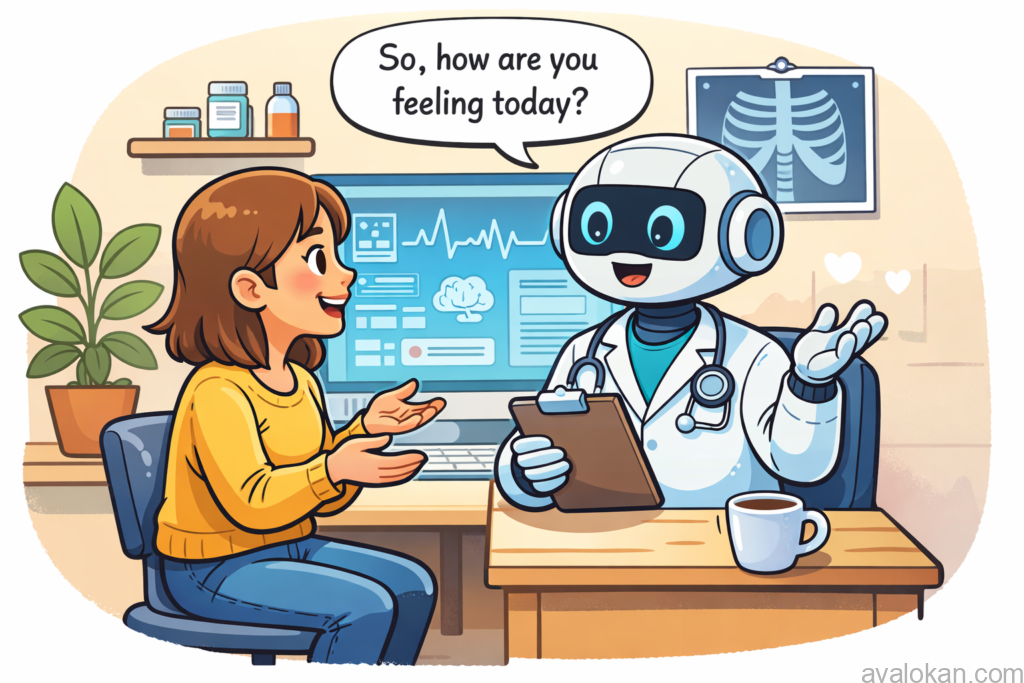
Unless it’s an AI doctor. Then suddenly, the question matters again.