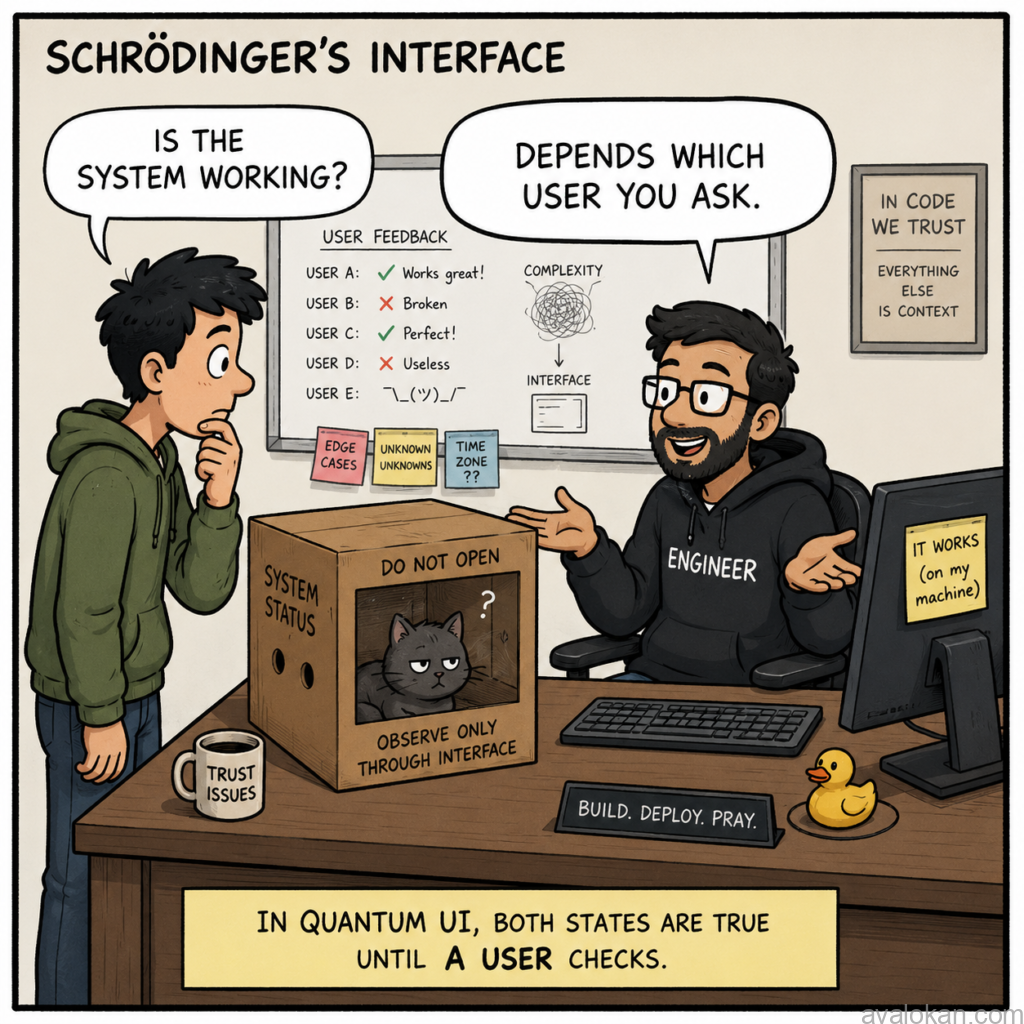
“What’s the weather today?” is such an ordinary question that we barely notice the complexity behind it. A voice assistant gives us a calm, simple answer, and we decide whether to carry an umbrella, change travel plans, or dress differently. Hidden behind that answer are forecasts, data sources, probabilities, model assumptions, and uncertainty. The interaction feels effortless because the complexity has been compressed into a single response.
That simple exchange led me to think about a broader question: where do the most significant failures in modern systems actually come from?
The instinctive answer is usually software bugs. Yet many of the most costly incidents in technology, finance, healthcare, transportation, and public services emerge from something more subtle. Systems often behave exactly as they were designed to behave. The consequences arise from how information is interpreted, how trust is formed, and how decisions are made.
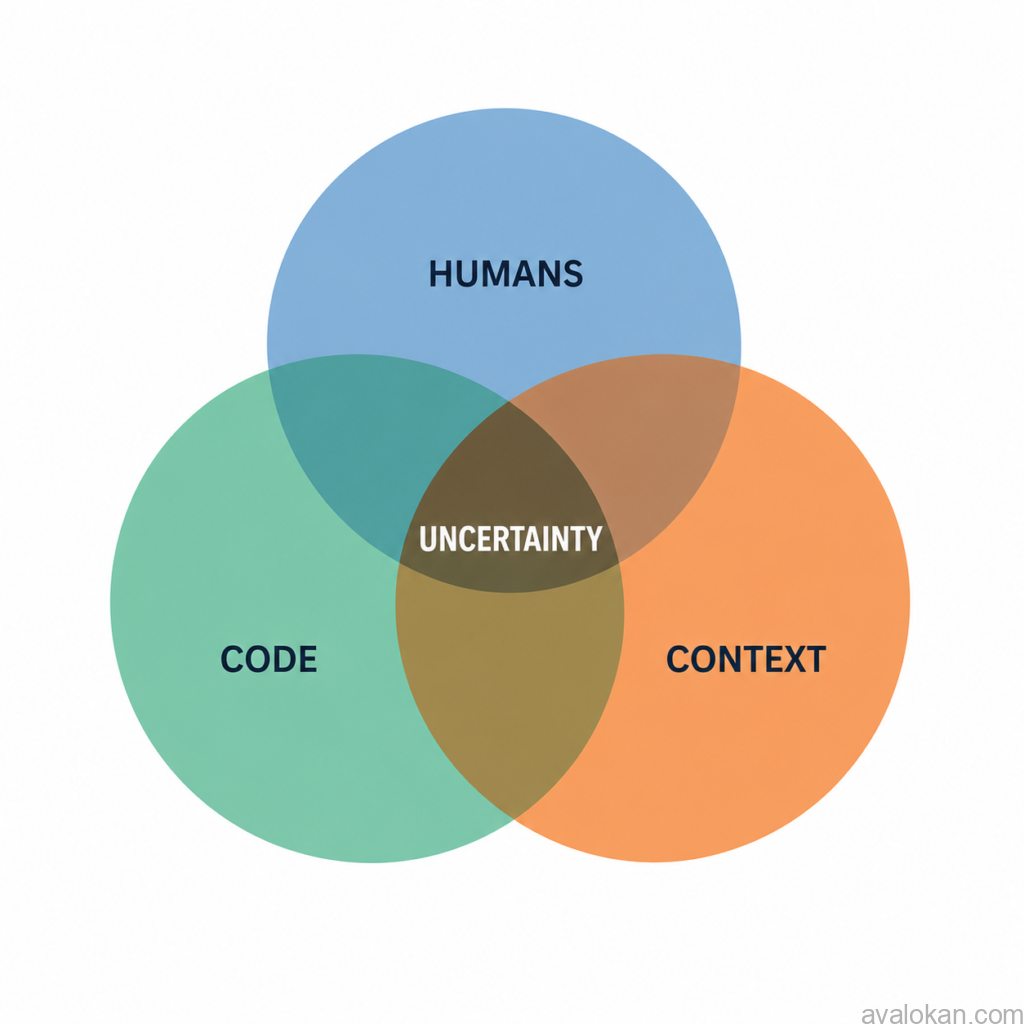
In these situations, the challenge sits in the space between humans, code, and context.
This pattern appears everywhere. In a modern car, a spoken command can trigger a chain of software-driven actions. In a hospital, clinicians rely on dashboards and alerts to support rapid decisions. In industrial control rooms, operators monitor complex processes through carefully designed visual interfaces. In financial systems, traders interact with vast technical infrastructures through a handful of screens and workflows.
The underlying systems are often extraordinarily sophisticated, yet most people interact only with their representation. What matters in practice is not simply what the system knows, but how that knowledge is communicated.
A chart can influence a conclusion. A label can shape interpretation. A recommendation can guide action. A confident response can create confidence in return. Small design decisions accumulate and quietly influence behaviour over time.
The Space Between Humans, Code, and Context
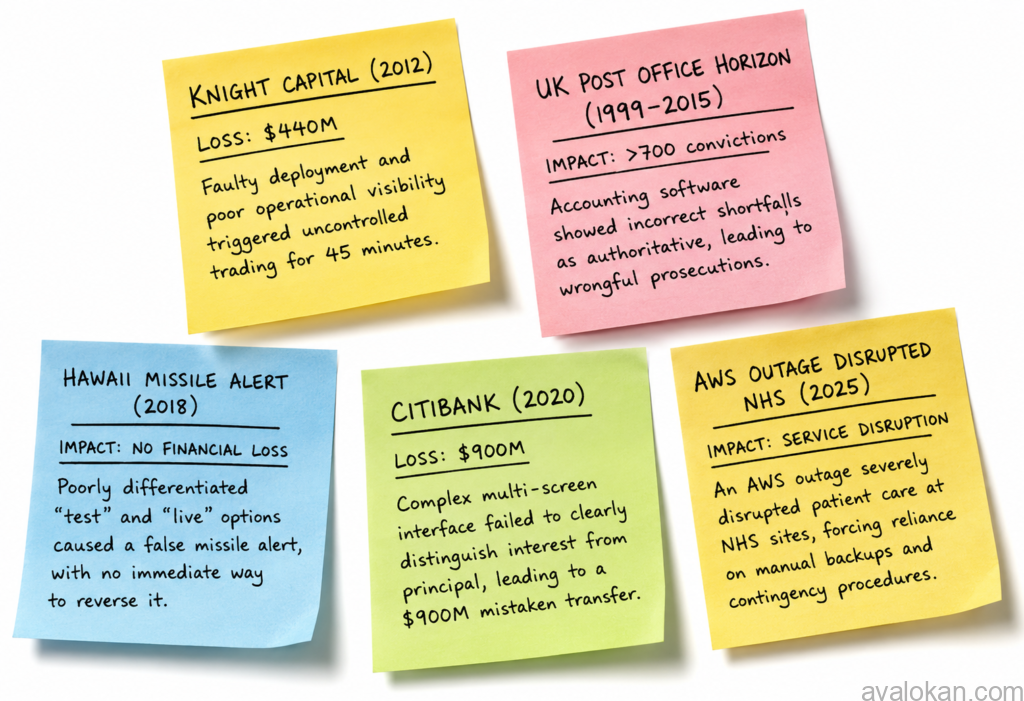
Many well-known incidents illustrate this point. Looking back, the technical components often formed only part of the story. Human judgement, organisational processes, operational context, and interface design all contributed to the outcome. The resulting failures were systemic rather than purely technical.
This is why I find the relationship between humans, code, and context so fascinating.
Code provides capability.
Context provides meaning.
Humans provide judgement.
The most interesting challenges emerge where those three intersect.
As AI systems become more capable and more conversational, this intersection becomes increasingly important. Questions are asked in natural language. Decisions are informed by generated responses. Recommendations arrive instantly and often with remarkable fluency. The quality of these interactions depends on far more than technical accuracy. It depends on how confidence is expressed, how uncertainty is communicated, and how people understand the boundaries of a system’s knowledge.
Seen through the lens of complex systems, trust develops gradually. It grows as assumptions become visible, uncertainty is communicated clearly, and people gain experience with how a system behaves. Over time, trust becomes one of the most valuable outputs of a well-designed system.
Reflecting on this, I have increasingly come to see design as the scaffolding that supports trust. We often celebrate larger AI models, faster processors, and more sophisticated algorithms. Yet many real-world outcomes are shaped by something less visible: how information is presented, interpreted, and acted upon by people.
Design translates complexity into understanding. It turns information into action and uncertainty into informed judgement. In doing so, it shapes the relationship between humans and technology.
Perhaps that is why the most expensive bug is often not a bug at all.
It is a misunderstanding that emerges somewhere between humans, code, and context.